Track what’s in the studio and what’s out on show.
Art inventory for artists and studios: keep photographs, edition details, source documents, and exhibition history together around each work.
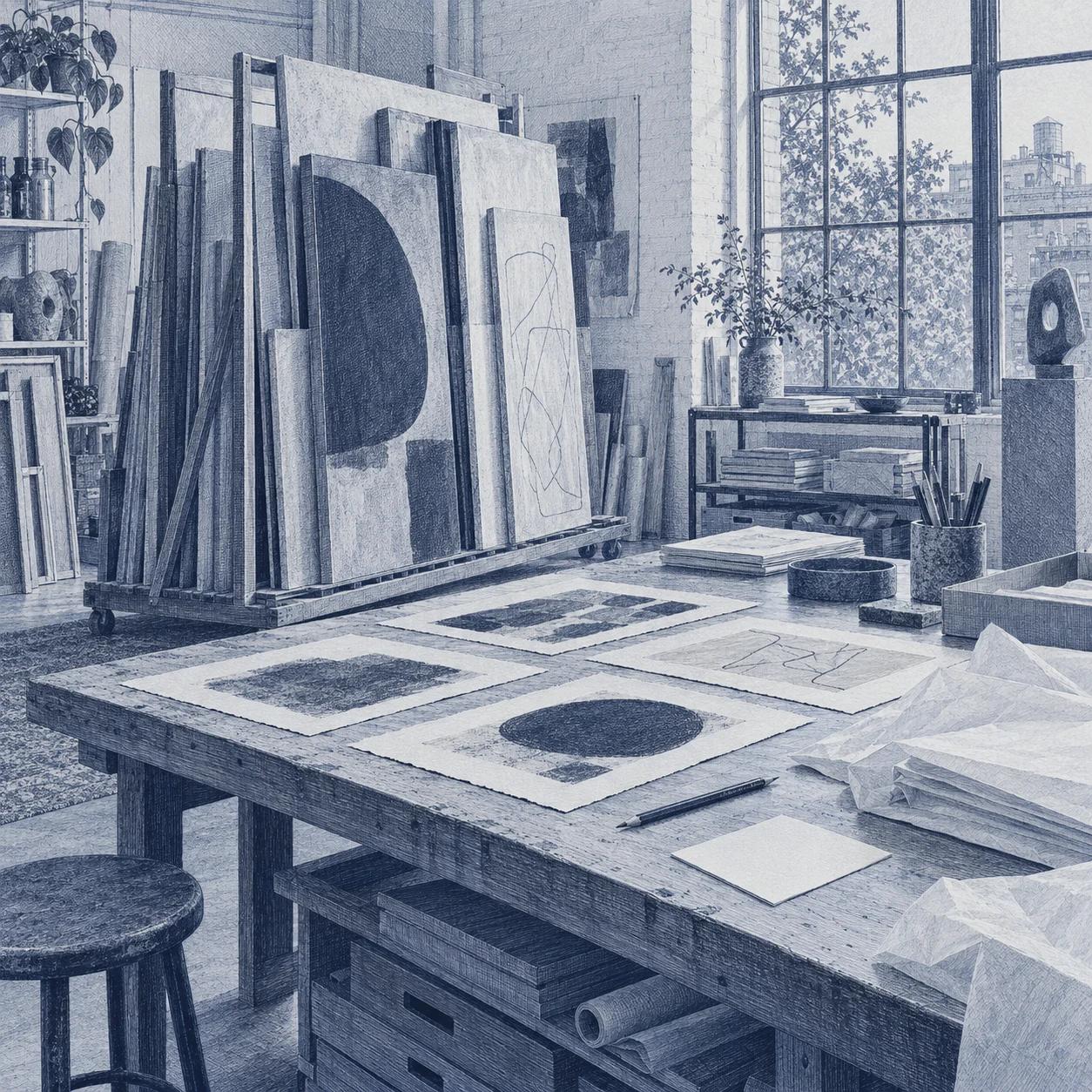
Make the record once. Use it again.
A work begins with what you know today. Add the details that matter to your practice, then prepare the next label from the same record.
Blue Form No. 3
- Artist
- Sample studio
- Year
- 2026
- Medium
- Relief print on paper
- Edition
- 3 of 12
- Dimensions
- 50 × 70 cm
More room for the making.
A clear archive should serve the work, not become another task to maintain.
Keep what matters. Photographs, identifiers, edition details, and source documents stay with each work.
Prepare what’s next. Bring reviewed details into a label, tear sheet, or catalog for an exhibition.
Keep the history. Record where a work has been and who is connected to it without losing the earlier context.
Your archive can move with you.
Bring existing records into Verso and export the details and originals when you need them.
Artist and studio questions.
What should I record for each artwork?
Start with an inventory number, artist, title, images, and what you know about the date, medium, and dimensions. Add edition details and source documents as you find them. Missing information can stay blank; keep uncertain details clearly qualified.
Can I keep edition information with the work?
Keep edition numbers and sizes with the artwork details, alongside photographs and source documents. Use a distinct inventory number for each cataloged work so similarly titled pieces or edition copies remain identifiable.
Can I prepare labels and tear sheets from my records?
Reviewed artwork details can be used in catalogs, tear sheets, and labels. Check the selected fields and images before sharing a report, especially when a record also contains private information.